Recycling and Sustainability — Lawn Mowing Queens Park
 At Lawn Mowing Queens Park we balance beautiful green spaces with responsible waste practice. Our Queens Park lawn care approach is designed to optimise an eco-friendly waste disposal area and create a truly sustainable rubbish gardening area for local homes and communal spaces. We believe that mowing services in Queens Park should do more than trim grass: they should reduce landfill, return organic matter to the soil, and support local circular-economy projects. With practical sorting, local partnerships and a low-carbon fleet we aim to make every cut count.
Our immediate performance commitment is clear: a recycling percentage target of 75% of green and garden-related waste diverted from landfill within three years. That target covers clippings, pruning, small branches and soft landscaping residue. We also set interim milestones — 50% in year one and 65% in year two — to keep progress transparent and measurable. These figures align with local environmental ambitions and the wider push for sustainable lawn care in the borough.
 We work closely with the way boroughs approach waste separation: most local authorities in the area operate kerbside collections for mixed recycling, separate food and garden waste, and designated glass and textile streams. Our on-site sorting mirrors that system to make handover to municipal or contracted processors seamless. Typical separation activities include:
- Garden waste (grass, leaves, soft prunings) for composting or anaerobic digestion
- Separate containers for soil, turf and non-recyclable debris
- Segregation of plastics, metals and wrap where applicable
Designing an Eco-Friendly Waste Disposal Area
Our proposed on-site waste disposal area is compact but effective: clearly labelled bins, sheltered compost bays for slow decomposition, and a secure area for storing reusable materials like paving slabs or used pots. The design follows best practice for Queens Park grass cutting operations and is intended to be replicable for small gardens and community spaces. We favour passive wind-row composting for bulky green waste and active in-vessel solutions where space allows, reducing haulage and improving nutrient recovery.
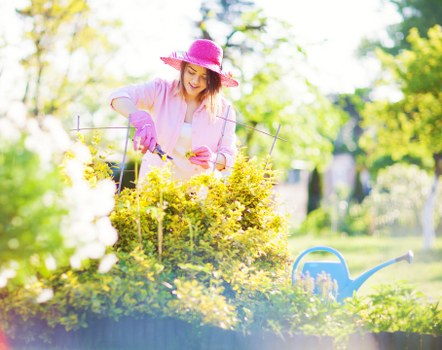 The sustainable rubbish gardening area is more than storage — it’s a resource hub. We reclaim turf where possible, create leaf mould from autumn leaves, and process mower clippings into high-nitrogen mulch for beds. Many of these outputs are reused on-site to feed soil biology, lowering fertiliser needs and improving water retention. Re-using green material locally also reduces vehicle trips to processing hubs, cutting emissions from routine garden maintenance.
Local transfer stations and recycling infrastructure are central to our logistics. We consolidate loads to make efficient trips to nearby transfer stations and civic amenity sites that serve NW6 and neighbouring districts. These hubs accept large green waste loads and dry mixed recycling, and we coordinate with municipal collection windows to hand over sorted waste streams directly, minimising time and handling.
Partnerships, Charities and Community Reuse
Partnerships are fundamental. We partner with local charities, community gardens and reuse organisations to give useful items a second life: potted plants and planters go to community sites, clean soil and compost are offered to allotments, and usable timber or paving is directed to refurbishment groups. Our charity partners include community allotment schemes, local reuse centres and volunteer-led urban farms. Strong ties with social enterprises help ensure materials benefit residents and support local environmental education.
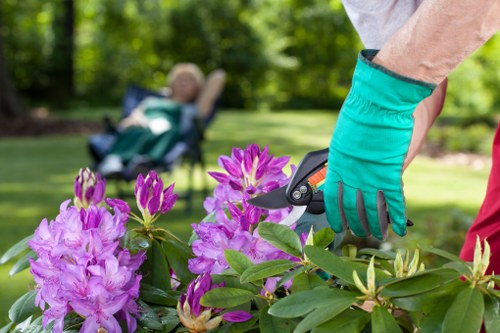 To encourage wider engagement we run seasonal drives with community partners to collect bulky green waste and surplus planting materials. We also coordinate donations of soil improvers and mulch to community gardening projects that maintain public planters and pocket parks. These collaborations turn routine Queens Park lawn maintenance into a civic resource, increasing the reuse rate and supporting social outcomes alongside environmental ones.
 Low-carbon vans and operational choices round out our plan. Our fleet transition prioritises electric vehicles (EVs) for short urban trips and low-emission hybrids for longer or heavier loads. Route optimisation software reduces mileage, while loading protocols lower stop-start inefficiency when transporting sorted green waste to transfer stations. These measures together reduce CO2 emissions from our mowing services in Queens Park and the wider borough.
Measuring progress matters: we maintain a simple reporting regime that tracks tonnage diverted, percentage recycled, and vehicle emissions saved through EV usage. Targets are revisited annually and shared with community partners. As part of our transparency we publish aggregated recycling rates and anecdotal reuse case studies that show where mulch, compost and reclaimed materials have been put to work around Queens Park.
Key elements summarised:
- Recycling target: 75% diversion of garden waste within three years
- Collection approach: mirror borough separation – food, garden, dry recycling
- Partners: community gardens, reuse charities, civic amenity and transfer stations
- Fleet: prioritise EV vans and low-carbon logistics
Our commitment is straightforward: deliver high-quality Queens Park lawn mowing and lawn care in Queens Park while reducing environmental impacts. By blending practical on-site sorting, partnerships with charities and community projects, use of local transfer stations, and a low-carbon vehicle strategy, we turn routine mowing into a measurable contribution to neighbourhood sustainability. Together, these steps create an efficient, accountable and resilient model for sustainable garden waste management in the area.